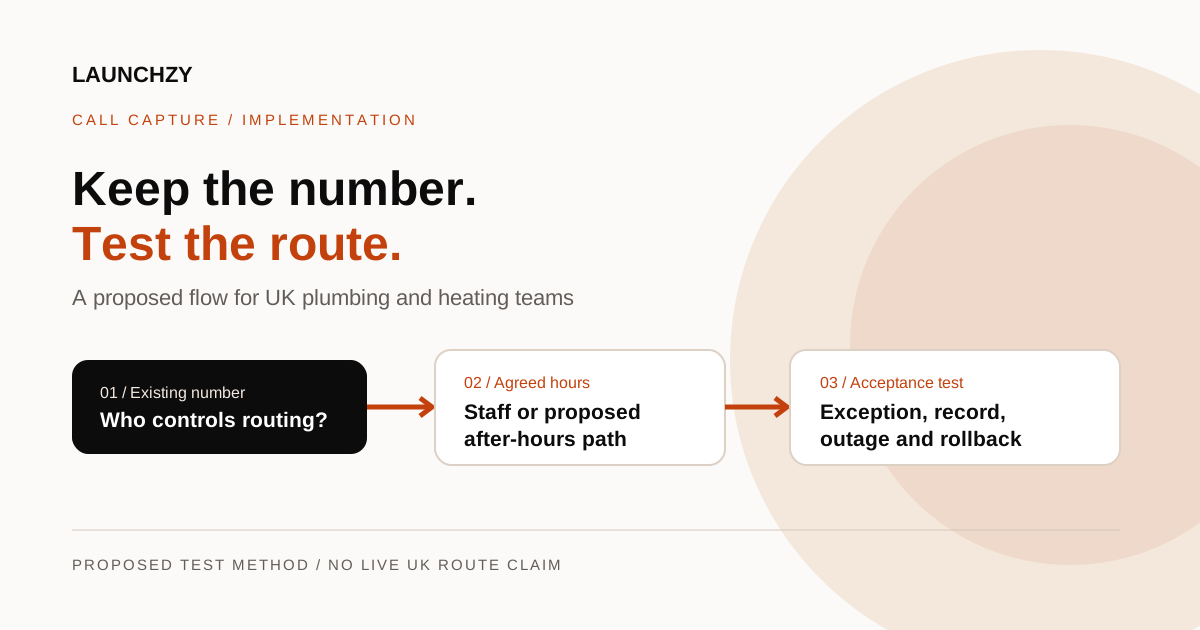
Possibly. Keeping a plumbing firm's advertised number is a routing design question, not a promise a vendor can make before seeing the current carrier or phone system. The safer starting point is to map the existing path, test a proposed after-hours path on the actual number, and agree who takes over when the new path fails.
The short answer
- You may be able to keep the number callers know while changing where calls go at selected times. The answer depends on who controls the number and what its carrier or PBX can forward.
- Keep the staffed daytime path explicit. Define the after-hours, no-answer and busy conditions separately.
- Test routine intake, an urgent exception, a request for a person, failed booking or logging, provider outage and rollback before any live switch.
- This is a proposed acceptance checklist. It is not a passed Launchzy UK phone-route test or a guarantee for your business.
On this page
Map the number before changing it
Start with the number customers already call. Who owns it? Does it sit with a carrier, hosted phone service or PBX? Who can change forwarding rules and who can restore them? Record the current staffed-hours path, voicemail, no-answer timeout, busy behaviour and any on-call rota. Do this before selecting an answering product.
Some telephony platforms offer forwarding or SIP connections to an AI service. For example, ElevenLabs documents SIP trunk configuration. That is a vendor capability with setup prerequisites. It does not prove compatibility with your number, carrier, PBX or CRM.
Agree the proposed call flow
A simple design to discuss is staff first during opening hours, then a defined after-hours or no-answer branch. The branch might collect the caller's issue, location and callback details, then present a recorded outcome to the team. Treat it as a diagram for a test, not a statement that this route is already live.
Write down what the system may say about availability, prices and appointments. A booking should be called confirmed only when the intended calendar contains the correct record. Give a named person responsibility for exceptions and decide what the caller hears when that person cannot be reached. A transfer setting alone does not mean someone answered. ElevenLabs documents transfer configuration and limits, which still need an end-to-end test.
For an urgent or safety-related call, use the firm's approved escalation instructions and a named available destination. Do not let a scripted intake imply that a plumber has been dispatched. If the handoff cannot be verified, the caller needs a clear alternative.
Six tests to run on the real number
These are proposed acceptance tests for a reversible pilot. A supplier should show the actual call path and the resulting record, then obtain the owner's sign-off.
- Staffed hours: ring the published number and confirm the existing team receives the call as agreed.
- After hours and no answer: place real UK test calls in both conditions. Check where they land and what the caller hears.
- Routine enquiry: inspect the callback or booking record for correct time, contact details, location and issue. Do not count a spoken promise as a saved booking.
- Human request and urgent exception: test the named destination and what happens when that person does not answer.
- Failure path: test busy lines, provider outage and failed calendar or CRM writes. Confirm the caller receives a truthful next step.
- Rollback: restore the original route and repeat a test call. Record who can do this and how long it actually takes.
For each test, keep the dialled number, timestamp, expected path, actual path and owner decision in a restricted record. Do not paste caller names, phone numbers or recordings into a public worksheet.
Check the record and caller data
Ask where the call outcome lands. A CRM integration claim needs a successful write, the right lead source and a human who owns follow-up. If the team uses a calendar, verify its timezone, availability and cancellation behaviour. Confirm consent wording, access, retention and provider settings before collecting live caller details.
For the commercial decision, use your own missed-call and callback records. Our plumbing and heating payback worksheet separates genuinely lost enquiries from callbacks and tests completed-job contribution against full system cost. A new route is useful only if the team can act on what it captures.
When to leave the route alone
If the receptionist or on-call rota already covers relevant enquiries, improve that workflow first. The same applies when there is no available exception owner, no spare crew capacity, or no safe way to restore the old route. A clearer voicemail and accountable callback process may be a better first move.
What our controlled demo proves
Launchzy's Oak & Flow example is a fictional controlled demo. Text-mode tests showed enquiry intake and a real demo callback booking. Its Telnyx number was not connected and telephone transfer was disabled. The test did not show a UK carrier-to-agent-to-human route, a plumbing client result or emergency dispatch. Read the broader trades call-flow guide for the information a receptionist path should collect.
Map your existing route before buying
Bring your current carrier or PBX, opening hours, present call owner and one anonymised call-flow diagram to a Call Capture fit review. We can scope a reversible test and identify where your own setup needs proof.
Review Call Capture fitSources and test boundary
- ElevenLabs, SIP trunking documentation
- ElevenLabs, transfer to number documentation
- Oak & Flow controlled demo setup and test record, Launchzy, 24 September 2026. Fictional firm. No live UK telephony proof.